
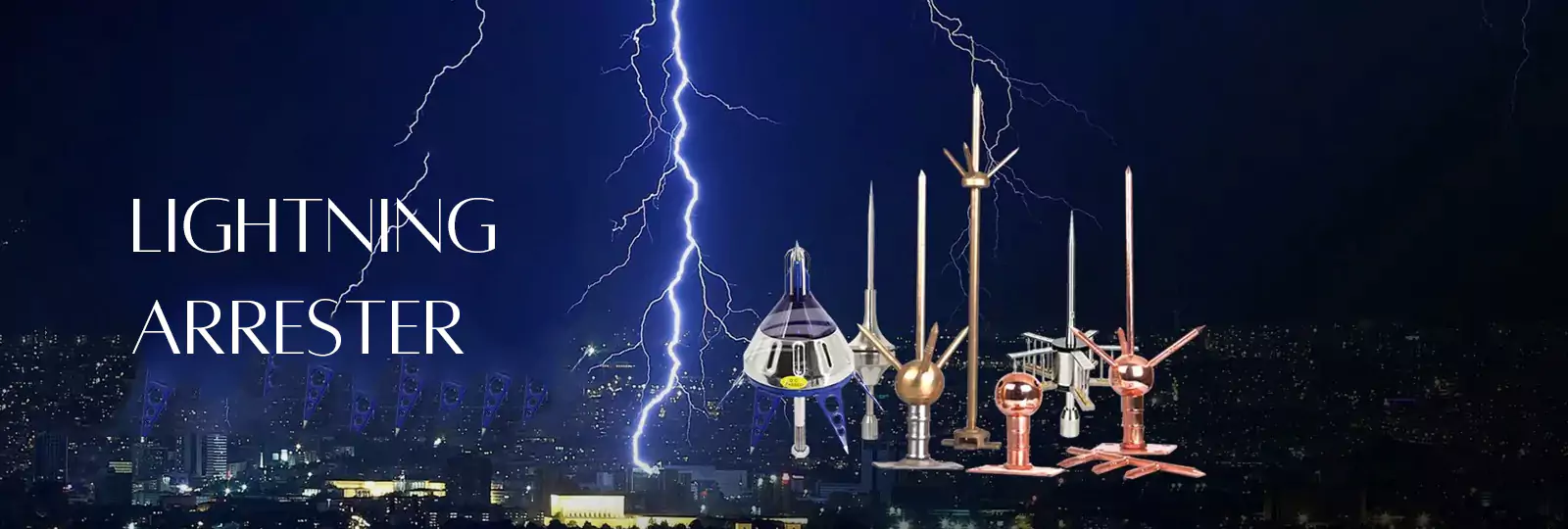
Lots of homes, factories, telecom towers, and power units are damaged each year by lightning strikes. Apart from harming buildings, these wave surges also have the very quick ability to damage electrical equipment. That is why a lightning arrester is needed in the picture. Unpredictable surges are stopped most easily by the surge suppressor in the electrical system. Even so, there are differences between arresters, and choosing the wrong one might cause you problems. Here, we’ll show you how to pick the correct lightning arrester for your system.
A lightning arrester helps to safeguard electrical installations and equipment from large surges of voltage, mainly when lightning happens. The function is to securely lead the surplus voltage back to the ground and make sure everything keeps operating properly. While a surge protector deals only with minor surges, a lightning arrester is made to protect against huge and dangerous surges that can damage a complete system. They usually go in at standard points in the power network to deal with abnormal surges.
Key Types of Lightning Arresters & Their Applications
Different kinds of lightning arresters are used for various purposes depending on what they will face. These are some of the most common issues:
Rod Gap Arrester
- Use: Older installations, basic protection
- Pros: Low cost
- Cons: Less reliable in polluted environments
Horn Gap Arrester
- Use: Medium-voltage power systems
- Pros: Visible arc gap for easy inspection
- Cons: Requires regular maintenance
Valve-Type Arrester
- Use: Power substations and industrial setups
- Pros: Effective surge control, rugged
- Cons: Larger and more complex
Metal Oxide Varistor (MOV) Arrester
- Use: Residential, commercial, and industrial setups
- Pros: High-speed response, maintenance-free
- Cons: Slightly higher cost, but worth the reliability
Choosing the right type depends heavily on your specific setup and exposure to lightning activity.
Factors To Consider Before Buying
To get the best lightning arrester, you need to know more than just the product's availability. These things must be considered to make an evaluation:
Voltage Level Compatibility
Make sure the arrester has been designed for your circuit's voltage. If an arrester is rated too high or too low, it might not work correctly and can seriously harm the system.
Discharge Capacity
It means how much electricity the arrester is capable of stopping. Because of its lightning activity, such areas should have reservoirs with a high discharge capability.
Environment
Check the air quality for elements such as humidity, salinity, and pollution from factories. If you use devices in tough weather, pick those that are weatherproof and do not rust.
Installation Site
You should pick a spot on a roof, at a standalone transformer, or inside a building. These three factors are important in this situation.
Maintenance Requirements
Certain arresters have to be checked occasionally, while other types are made not to require regular care. Always be ready for each outcome that may happen.
Compliance & Certification
Make sure that the product follows IEC 60099-4 and the standards of the IEEE, like C62.11. Products with certification are secure, durable, and worth keeping.
Budget
While cost matters, don't make it the only factor. A slightly higher upfront investment can save thousands in equipment damage and downtime.
Read Also:- Why Regular Maintenance of Lightning Arresters is Essential?
Residential vs. Commercial vs. Industrial Needs
Every environment has different needs. Here's how to approach it:
- Residential: Opt for compact, maintenance-free MOV arresters. They offer solid protection for homes and small buildings.
- Commercial: Choose arresters that support moderate surge handling with strong reliability. Redundancy and easy servicing are key.
- Industrial: Go for high-discharge, durable arresters that integrate with broader power protection systems. Look for modular or scalable solutions.
Common Mistakes to Avoid
Many users unknowingly compromise their protection due to avoidable mistakes:
- Incorrect voltage rating
- Poor grounding practices
- Using the wrong type for the application
- Assuming one arrester can protect an entire building
- Skipping maintenance checks on older models
Avoiding these common errors can drastically increase the effectiveness of your lightning protection system.
How to Ensure Proper Installation?
Installation is just as critical as selection. Always use a certified professional for setup. Proper grounding is non-negotiable—it's what makes the whole system work. Ensure the arrester is placed at the correct position in the circuit and conduct periodic inspections if your model requires them.
Recommended Brands or Certifications
You should go with brands that fulfil the international safety standards of IEC and IEEE, as there are plenty of other brands available. A Lightning Arrester supplier in Delhi with certified products can help Indian buyers get quality products and adequate support from the company.
Conclusion
The selection of the right lightning arrester takes into account both the technology and the setting, the voltage present, and your abilities to maintain it in the future. Using the same protection for all homes doesn’t make sense when it comes to surge protection.
Oriental Star Earthing Solutions guides customers so they can pick the appropriate solution for themselves. Our focus on solutions covers all areas, from simple home installations to hard-working industrial settings. Should you have doubts about the right arrester for your system, simply ask us. We will help you choose the best policy and confirm that your protection remains strong in every way.